Kyle Orland got his start writing about video games at the age of 14, when he founded '90s fan site Super Mario Bros. HQ on his parents' AOL web space. Since then he's somehow put together a career writing and saying millions of aggregate words about games for dozens of outlets ranging from NPR and MSNBC to Electronic Gaming Monthly and Paste Magazine. He's been the Senior Gaming Editor at Ars Technica since 2012. Kyle is the author of Wiley Publishing's Wii for Dummies and Farmville for Dummies, as well as two collections of reporting and criticism—The Game Beat and Save Point—both published by Carnegie Mellon's ETC Press.

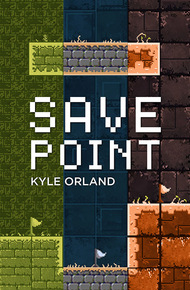
Save Point by Kyle Orland

Nearly 50 years after the launch of Pong created the video game industry as we know it, it's fair to say the medium is approaching maturity in its middle age. Culturally, commercially, artistically, and technologically, video games have never been more relevant, vibrant, or widely recognized as a major pastime and a unique form of expression.

Getting to that point, though, meant video games had to go through their own awkward adolescence. Through contemporaneous reporting and analysis, this book looks at the medium's uncomfortable transition period between 2003 and 2011, when industry did its best to grow up with the young audience that had grown up with games as their entertainment of choice through the '70s, '80s, and '90s.

Many gaming trends that are still apparent today found their roots in this period, when technological, cultural, and business forces pushed the industry to change faster than ever before. The pieces collected in this book analyze how games were learning from their past and influencing the future, report on some of gaming's growing and myriad sub-communities, and examine how the business of selling and marketing games was evolving alongside the explosive growth of the Internet.

CURATOR'S NOTE

Kyle is one of the industry's best journalists because he combines lessons gleaned from our past with observations of its future. Save Point highlights some of his best work chronicling the growth spurts of the industry—the good, the bad, and the painful. – David L. Craddock


REVIEWS

  • "Save Point is an incredible time capsule, a look into what the author himself calls the late adolescence of the industry, as fraught and weird and poignant as that time can be. His reporting on community, in particular, feels formative: what is now a professionalized arm of a multi-billion dollar industry began in funky internet corners and musty real-life meetups: a section on early Twitter made me pine for the earlier days. In all, Save Point feels like a wiser examination of a beloved album from college: sure, those days were more complicated (and possibly more sexist?) than we tend to remember, but damn if there isn't a strong pull to go back sometimes, sit with it, and look at what was so important."

    – Danielle Riendeau, Editor-in-Chief, Game Developer
  • "This collection is a fascinating read through a period in gaming's past when the industry began to fully embrace its fully-connected, online future. Kyle's coverage of this period distills the beginnings of discussions and arguments we are still having today. It's a must read to understand how we got to where we are today."

    – Chet Faliszek, Co-writer for Half-Life, Portal, and Left 4 Dead
  • "Kyle Orland is equal parts historian and historical object, a rare video game journalist who can tell you in detail about the days when writers had to walk to E3 — uphill both ways — because he was there. And yet, Orland never succumbs to nostalgia. His hard-earned expertise gives each of his stories precious context and color. As video games enter a new period of change with streaming, subscriptions, and the metaverse, his latest collection of writing from another moment in flux feels particularly relevant."

    – Chris Plante, Co-founder, Polygon.com
  • "I've worked with Kyle and have read his work throughout the last two decades. This collection is a testament to his institutional knowledge of an ever-changing industry and his dogged pursuit in chronicling and understanding it. Moreover, it's a thorough meditation on all the changes humans have experienced so far this century, and how we're changing the way we interact with the great distraction of games."

    – Gene Park, Reporter, The Washington Post
 

BOOK PREVIEW

Excerpt

The Making (and Unmaking) of a Nintendo Fanboy

In the late '80s, playing games on a TV meant owning a Nintendo Entertainment System. Heck, back then simply being a young boy meant owning an NES, as far as my friends and I were concerned. If you had an NES, you were somebody. If you didn't have an NES, you spent an entire year riding your bike up the street to hang out with the usually intolerable Paul Paboojian (named changed to protect the intolerable) just to get a chance to play as Luigi because your STUPID PARENTS didn't realize that owning an NES was the SINGLE MOST IMPORTANT THING IN THE UNIVERSE until your seventh birthday when a trip to Circuit City granted you your rightful place in suburban childhood society.

*ahem*

In those blissful, early years of my gaming education, Nintendo's position was so dominant that the phrase "play Nintendo" was at least as common as the phrase "play videogames" in popular parlance, and was understood to mean the same thing. The Atari 2600 was practically obsolete before most kids I knew were born, and while we were all dimly aware of the existence of the Sega Master System, the fact that I didn't know anyone who knew anyone who had one meant it may as well not have existed. Back then, Nintendo meant video games and video games meant everything.

I don't remember the date, but I clearly remember the day, sometime in 1990, when that simple equation got a little more complicated. I had dragged my parents to Toys "backwards R" Us and rushed to the Nintendo-filled aisle 2, as usual, when I happened upon a display featuring the Sega Genesis and a copy of Altered Beast. Five minutes of play later, I was already utterly convinced of two things.

First, it was clear that the NES wasn't going to hold up much longer on purely technical terms. This much was unavoidable. When I first saw Altered Beast's human protagonist transform into the titular beast via that iconic full screen animation, I was quite sure I had never seen anything so amazingly cool-looking on a home video game console in my short life.

Second, playing Altered Beast convinced me that Genesis games just weren't as fun to play as Nintendo games. The simple walk-forward-and-punch-stuff gameplay didn't even hold up to a simple brawler like Double Dragon II, much less to the elegant design and endless imagination of Super Mario Bros. 3.

It was patently, obviously unfair to evaluate an entire system's library and prospects based on five minutes spent with a single game in a crowded Toys R Us. But you know what they say about the importance of first impressions. From that day forward, I was sure, as only a seven-year-old could be, that Nintendo represented all that was true and good in videogames while Sega and its Genesis were just trying to fool people into playing stupid, unfun games using flashy graphics.