David L. Craddock writes fiction, nonfiction, and grocery lists. He is the author of the Gairden Chronicles series of fantasy novels for young adults, as well as numerous nonfiction books documenting videogame development and culture, including the bestselling Stay Awhile and Listen series, Shovel Knight by Boss Fight Books, and Long Live Mortal Kombat. Follow him online at www.DavidLCraddock.com, and on Twitter @davidlcraddock.
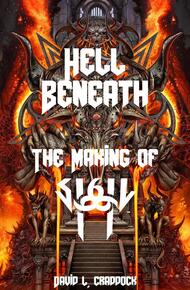
In 2023, id Software's seminal release, Doom, turned 30. In celebration, John Romero designed Sigil II, a nine-level WAD (user-created set of maps) that took players to the deepest layers of hell. Hell Beneath examines the design of Sigil II, from its levels and monster encounters to the motivation behind it.
How many game developers get to revisit their old titles? The ever-popular Doom modding scene allowed original creator John Carmack to return to his creation with two brand-new campaigns. Author David L. Craddock is well-versed in FPS history and design, with this book delving into not only its creation but Carmack's design ethos as well. – Kurt Kalata
Every January, the gaming community eagerly awaits two major events that kick off the new year. The first is Awesome Games Done Quick (AGDQ), a week-long event where some of the world's best speedrunners tear through their favorite games to raise money for charity. The second is the Global Game Jam, a fun occasion where participants of all skill levels attempt to create a game from scratch within a set timeframe, usually forty-eight hours, and according to a specific theme. Developers can register a venue as a "jam site" where anyone is welcome to camp out and plug away at their game, although that's optional. GGJ doesn't care where entrants work as long as they stick to the theme and time limit.
At the outset of the 2021 Global Game Jam, working from home was more of a requirement than an option. Venues around the world were closed because of Covid-19, forcing many businesses, including the GGJ, to pivot to remote events. In a thirteen-minute YouTube video, GGJ organizers announced that year's theme as "Lost and Found." Shoot-em-up, puzzler, platformer, FPS, walking simulator-any genre was eligible as long as it stuck to the theme.
Sometimes John Romero adopted a jam's theme. Other years, like this one, he forged his own path. Any game jam was a good excuse to make something, even if it had nothing to do with an event's theme. His collaborators in 2021 were Dave Ryley and Ian Dunbar. Both were programmers at Romero Games, the independent studio John and his wife, Brenda, a prolific designer who got her start working on the Wizardry series of computer roleplaying games, started in Ireland.
Ryley and Dunbar met Romero at his house and set up their computers near his on the dining room table. They had no idea what type of game they were going to make. Deciding on a theme and genre was part of the fun. "Brenda's in charge of deciding the title," John says, "so she told me to pick a number between one and twenty-six."
He chose thirteen, splitting the selection down the middle.
John and Brenda entered her library and went to a bookcase. Starting from one side, she counted books until her finger rested on number thirteen. The Outlaw Album: Stories, by Daniel Woodrell, is a collection of tales set "on the fringes of society" according to the book's Amazon page. It was also the title of the game they would make.
They hit on a design for The Outlaw Album almost right away. "You're in a Wild West town," Romero says. "There are tumbleweeds blowing around, a bunch of buildings, and a bunch of outlaws patrolling different locations. You're the sheriff who just arrived to clean this fucking place. You have a double-barreled shotgun, and you're going to kill them."
Easier said than done. The outlaws are attuned to every movement and sound. Give yourself away, and a single bullet is all it takes to send you to your grave. To win, you've got to get the jump on them. Pulling the trigger destroys them in grisly and memorable and ties into the team's core mechanic. "You have to fill up this photo album with pictures of the outlaws," says Romero. "The way you get photos of them is you have a Polaroid with the bright flash strapped on top of your shotgun. The Polaroid captures a screenshot of what you saw. If they're turning, or blood's flying out of their mouth, that's in the picture. You're trying to fill the album with pictures of the twelve outlaws in town at night."
The Outlaw Album wasn't finished within the jam's two-day timeframe, but the team didn't mind. Their game was fun, and it would be even better when they found the time to finish it. Just as importantly, it showed that despite his return to making levels for DOOM over 2018 and '19, Romero was still more than up to the challenge of mixing time-tested FPS design with new ideas. "Some people probably think, He just does DOOM stuff now. He's making DOOM levels, doing DOOM streams, and he talks about DOOM at conferences. He's just a DOOM guy. Even his book is called DOOM Guy. I'm making new stuff all the time."
That's what drives Romero. Whether he's building something new, like the FPS announced by Romero Games in the summer of 2022, hacking out a fun idea with friends, or loading his shotgun and returning to DOOM's fiery rendition of Hell, he strives to enter uncharted territory by doing things he's never tried before.
SIGIL II has a higher bar to jump than the original. The first SIGIL introduced new types of interactions for puzzles and progression unseen in DOOM's four commercial episodes, and rode the momentum of excitement generated by Romero's return to his most famous game. Gaming magazines and websites covered that return, and so did mainstream publications from Variety to USA Today. Fans are expecting SIGIL II, and will hold it to a higher standard. Romero expects nothing less.
"The levels in SIGIL were new, but I still need to get better. I need to feel like I'm moving forward with making levels and coming up with cool ideas. That's the only reason I'm still making games. If I was going to do the same game over and over, I would have gotten tired of it."